A new piece of gold is not truly blank. Before it reaches the body, it has already passed through fire, water, steel and the pressure of practiced hands. What looks like a surface is, in fact, a record.
Contemporary luxury has often mistaken flawlessness for value. It promises a world without evidence: no tool marks, no variation, no sign that an object once resisted its maker. But an entirely frictionless surface can feel strangely without time.
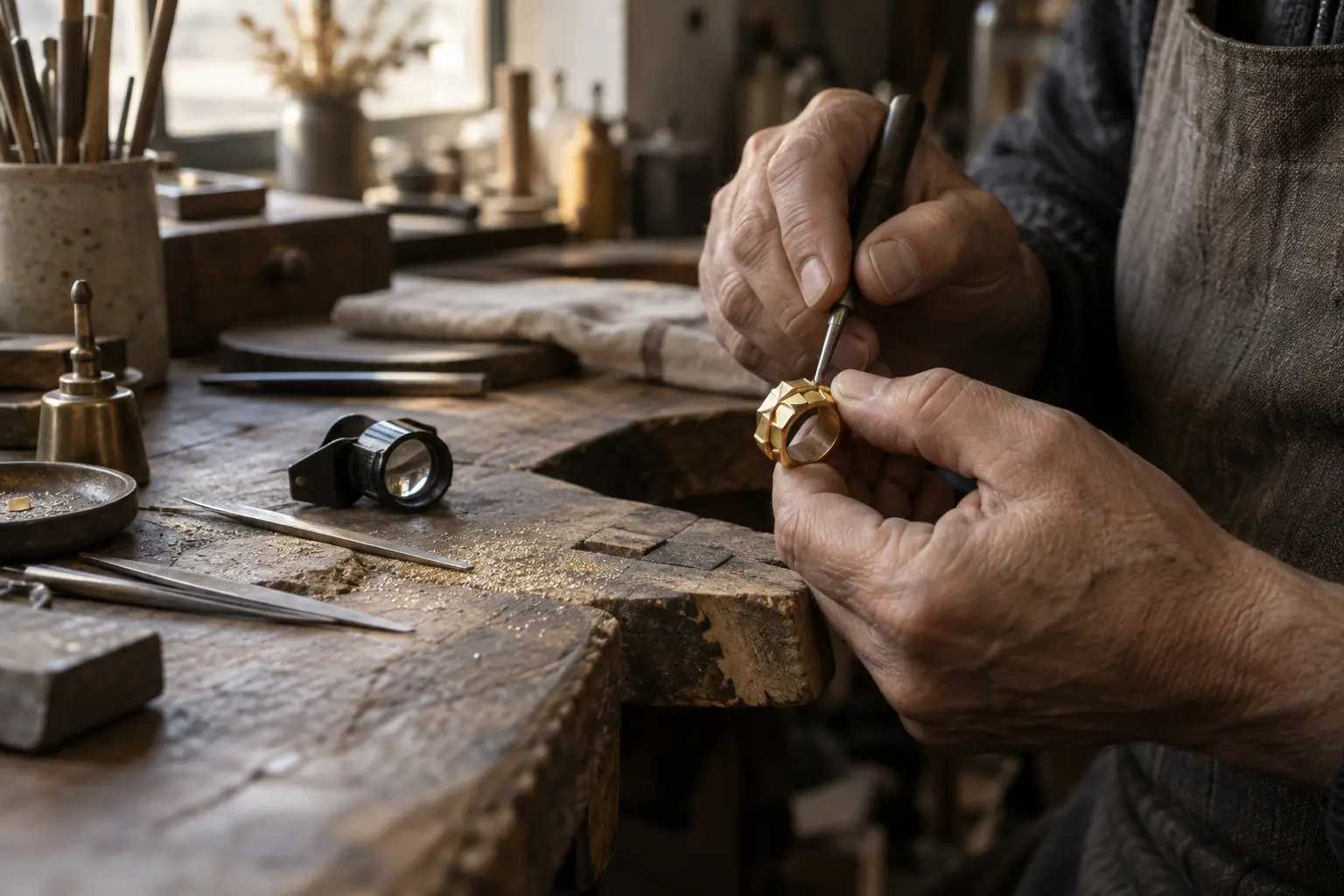
The honest mark
In our atelier, finishing is not an act of erasure. Filing establishes the planes. Emery softens their meeting. Burnishing compresses the gold until light moves across it with depth. At each stage, the hand decides how much of the previous stage should remain visible.
This is not carelessness dressed as romance. The difference between an accidental scratch and an intentional texture is control. The maker must understand the material well enough to know when to stop.
A surface that continues
Once worn, the piece leaves the atelier and begins another kind of finishing. A ring meets keys, stone, linen and skin. Its high points brighten; recesses deepen. The pattern is particular to one life.
We think of this not as deterioration, but completion. Jewelry is intimate architecture. Like a threshold worn smooth by generations of footsteps, it becomes more legible through use.
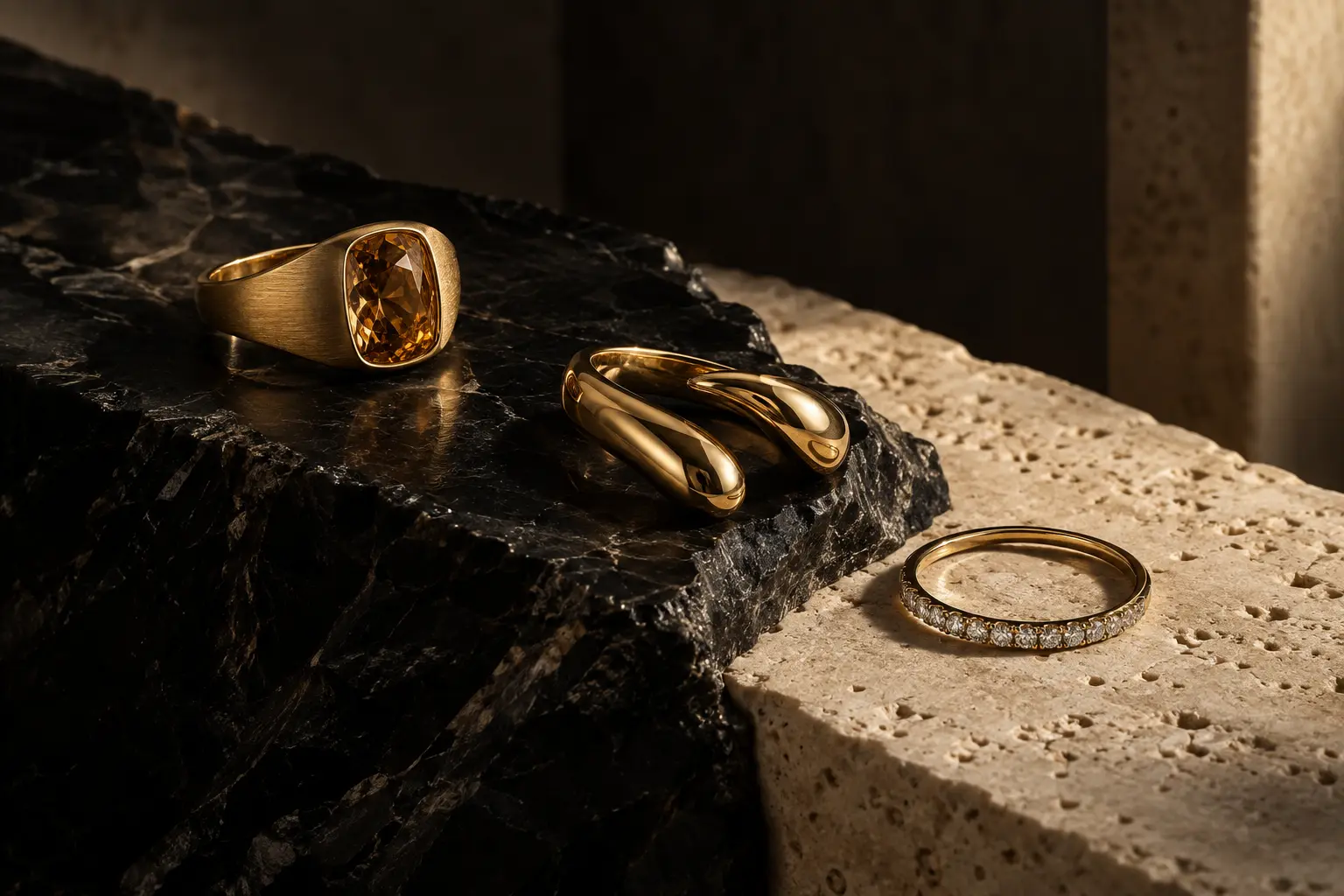
Care without correction
Annual care should preserve structure and integrity without returning the object to an artificial beginning. We clean settings, inspect joins and restore what protects the piece. We do not automatically polish away its history.
The surface remembers because we allow it to. That memory is part of the value: proof that the object did not remain separate from life.